Three Odysseys (#41)
The Art of Making Strategic Choices

Hello 🔵⚪️🔴
We all know our rituals at the start of the year. Global strategy cascading down into regional priorities, into local plans, into individual objectives. A long chain of translations - and who knows how much gets lost in them! The peers I admire most are those who approach this translation with genuine deliberateness. Who keep the spirit of the global strategy intact, while making it unmistakably relevant for their clients, their market, their team. And distinctive from the competition. That clarity, when you encounter it, is striking. And so enjoyable to work with!
I love this clarity and intent when it comes to business choices, and I love it just as much when it comes to artistic, creative choices. Recently, three reinterpretations of the great ancient story - the Odyssey - struck me as three unexpected mirrors to look at the art of making strategic choices. One is a translation: Emily Wilson's landmark English version of Homer's poem. One is a film: The Return, released in 2024. And one is a piece of music: Disco Ulysses.
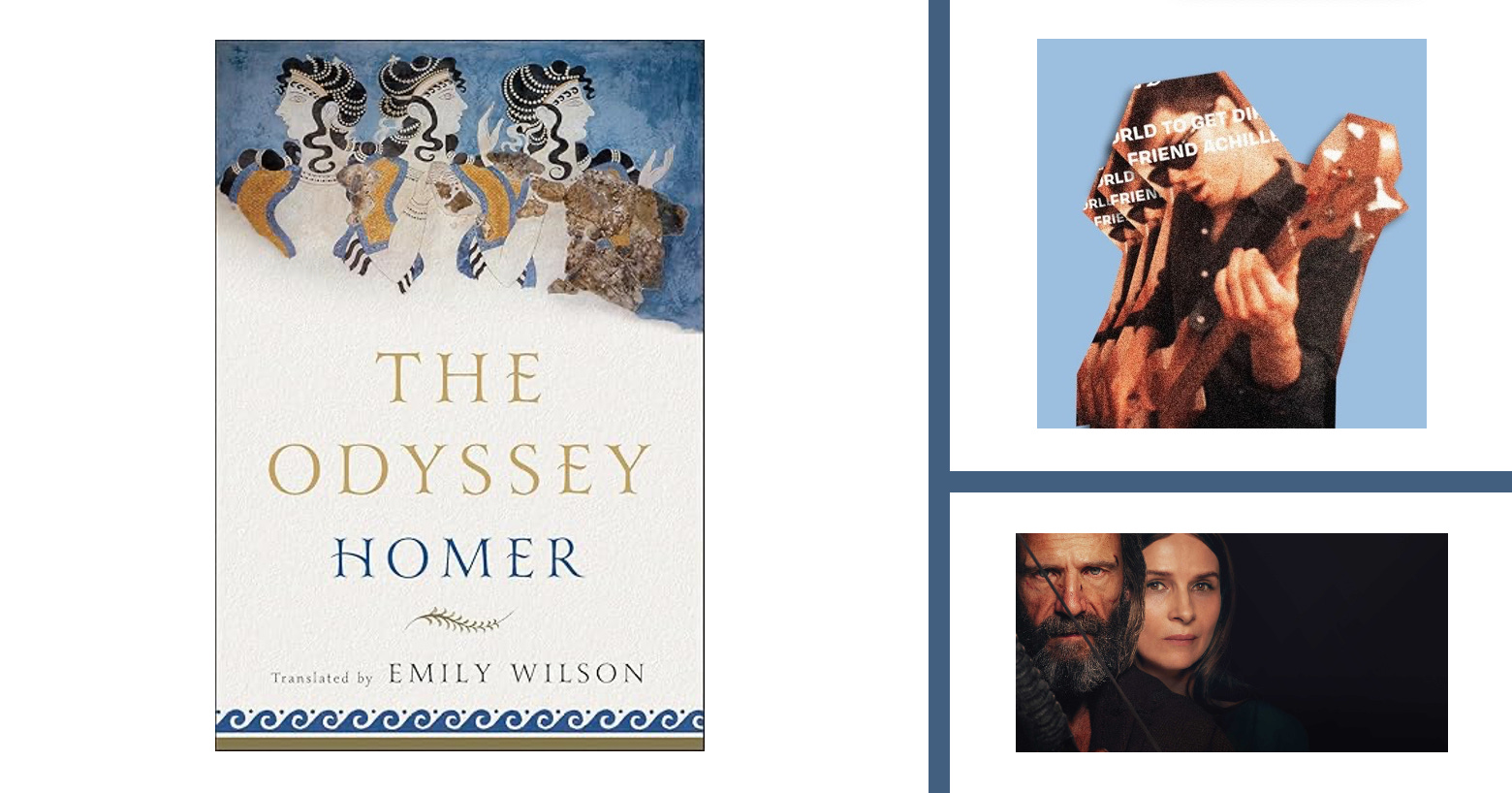
Emily Wilson and the art of translation
One may feel like an impostor when setting out to translate Homer's Odyssey. How would you approach a story that has been translated hundreds of times before, with such a strong, accumulated sense of how it should sound? When Emily Wilson set out to translate the Odyssey, she studied what came before her. And she noticed they shared something - a heavy, archaic grandeur, a language meant to feel ancient. She chose differently. Not out of rebellion, but out of conviction. She wanted a metered poem, to express the rhythm, the music. Instead of dactylic hexameter that sounds great in Greek, she chose iambic pentameter — the natural music of English. She matched Homer's line count exactly, preserving the size and shape of the work while finding its equivalent voice in a different language. Accessible without being dumbed down. Beautiful without being ornate.
The result is a translation that is incredibly refreshing, relevant, readable, unmistakably hers, and unmistakably Homer’s. A treat to read, from the very first line. “Tell me about a complicated man.”
This, to me, is the perfect metaphor for translating global strategy into local reality. You don’t just copy the words. You find the music that works for your audience, your market, your clients - while staying completely faithful to the intent.
The Return and the strategy of subtraction
The 2024 film The Return retells the story of Odysseus coming home - with one radical choice: no gods, no magic, no supernatural intervention. Just a man, weathered by war and years away, trying to reconnect with a family that has moved on without him.
It works. Differently, maybe shockingly - I was terribly missing Athena around! - yet in some ways more powerfully.
This is a question worth asking about your own strategy: what if you stripped away everything that glitters? The initiatives that sound impressive, the complexity that feels necessary. What would remain? Would it still hold? Sometimes subtraction doesn’t weaken a story - it reveals what the story was actually about.
Disco Ulysses and putting the groove front and center
Vulfpeck’s “Disco Ulysses” tells the Odyssey in music, and does something that makes you stop and listen: it puts Joe Dart’s bass front and center. In most music, you feel the bass more than you hear it. Its groove holds everything together, connects the rhythm to the melody, and stays largely invisible. Here, it becomes the voice of the piece.
Every team or a firm has a bass line. Someone - or something - that is essential, connective, and chronically underheard. Not because they lack substance, but because the spotlight rarely finds them. Who is the bass line in your company, in your team - essential, connecting, largely unheard? What if they were your overlooked competitive advantage?
Happy Friday 🔵⚪️🔴 whatever day of the week it is!